 Updates Hub

Post No. 003. About 10 minutes to read.
Visibility Before Reach: Why I Check Who Can Find You First
By Johnson Joel Sonayon (JJS), Digital Marketing & Growth Specialist, Lagos, Nigeria. Published .
How to tell whether the right people can actually see your business, before you pay for more reach.
In short: visibility is whether the right person, at the moment they need what you sell, can find you, notice you and remember you. Before you pay for more reach, check who can actually find you: search your name, search your problem in your customers’ words, and see what a stranger understands in ten seconds. More reach poured onto an unclear business only multiplies the confusion.
Music plays while you read. Use the round button and the slider at the bottom left to pause it or change the volume. This post is interactive. Tap the buttons and tick the boxes.
Why can’t customers choose you if they can’t find you?
Imagine a business owner with a good product, fair prices and a phone that hardly rings. She is sure something is wrong with what she sells. She changes the packaging, lowers her prices and prints a new flyer. The phone stays quiet.
Nothing was wrong with the product. Picture a beautiful shop with a perfect window, built on a back street with no sign. The people who needed it walked past the main road every day, searching, scrolling and asking friends, and nothing pointed them there.

A good shop with no sign is a shop nobody can choose.
That is the problem I want to explain today: visibility. It is one of the most common reasons good businesses stay quiet, and one of the easiest to mistake for something else.
What does visibility really mean?
Visibility is not a number of followers. It is whether the right person, at the moment they need what you sell, can find you, notice you and remember you. Those are three different moments. Tap each one.
A business can pass one of these moments and fail the other two. That is why likes and follower counts can look healthy while the phone stays quiet.
Is being seen the same as being seen by the right people?
A big audience feels like progress. But reach only counts when it is relevant.
A shop that sells wedding fabrics can have fifty thousand followers who love funny videos and still never sell a single yard. Another can have eight hundred followers, all of them planning weddings, and be fully booked. Tap each shop.
So the question is not “How many people see me?” The better question is “Who sees me, and do they need what I sell?” When you start asking it that way, you stop chasing attention and start looking for the right attention.
Who are the three kinds of people who look for you?
Not everyone who searches is searching for you by name. Customers usually fall into three groups, and each one needs something different from your visibility.
The first group already knows your name. They heard about you from someone, and they type your business name to check you out. For them, you need to be easy to find and correct when they find you.
The second group knows their problem but not you. They search for something like “my customers are not replying” or “caterer for a small wedding”. They do not know your name, and they never will unless you appear where they are looking. This group is where new customers come from, and it is the group most businesses forget.
The third group knows what kind of solution they want but has not chosen who to buy from. They are comparing. For them, you need to look clear and different enough to be picked.
Most businesses only prepare for the first group. That is why they stay known only to people who already know them.
Why should you speak the customer’s words, not yours?
Here is a quiet reason many businesses stay hidden: they describe themselves in their own words, while customers search in theirs. Tap a phrase to see what the customer types instead.
If your words never match their words, the match never happens, no matter how good you are.
A simple habit helps. Listen to how customers describe their problem when they first contact you, and use those exact words in your descriptions, your posts and your profile. The words customers use are the words they search with.
Where do people actually look for you?
People do not find businesses in one place. They look in four. Tap the ones where your business is properly present today.
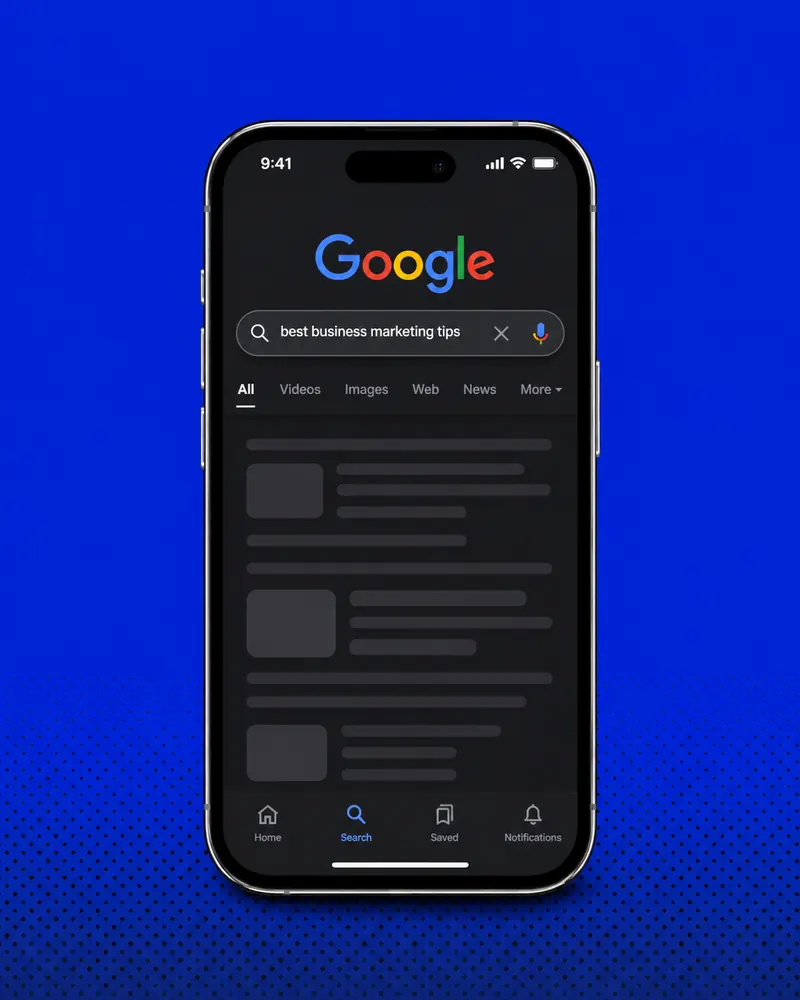
Someone types a need. Your business either answers it or does not.
Most businesses are strong in one of these and absent from the rest. A business that lives only on social media loses everyone who searches. A business that only grows by referral stops growing when the referrals slow down. Knowing where you are present, and where you are missing, is half of the work.
What is the Name Test?
Here is something small that makes a large difference. Does your business have one name, one short description and one look everywhere people meet you?
When your name is spelt one way on your profile, another way on your listing and a third way in people’s chats, you split your visibility. Search engines and people alike struggle to tell that these are the same business. The same damage happens when each place says something different about what you do.
When everything matches, each place you appear supports the others. Someone who sees you in one place recognises you in the next. Recognition is what turns being noticed into being remembered.
What if people see you but still don’t understand what you sell?
There is a trap on the other side of visibility. Some businesses are seen often, and still nobody understands what they sell.
A profile with a clever name, a stylish photo and a line like “Dreams made real” looks nice, but a stranger cannot tell whether you sell furniture, photography or financial advice. When people have to guess, most do not. They scroll on.
A visible business answers three questions within seconds: What do you do? Who is it for? What should I do next? Open your main profile in your mind, press the button and watch the clock.
 10
Time is up. Could a stranger answer these after ten seconds on your profile?
If a stranger cannot answer these after ten seconds on your profile or page, your visibility is leaking at the very moment someone has arrived.
Why is visibility a rhythm and not an event?
Being remembered depends on being seen more than once. One good post or one busy week does not make a business memorable. People remember what they see repeatedly, in familiar places, over time.
This is why consistency beats bursts. A business that shows up steadily, with the same name and the same message, slowly becomes the one people think of first. A business that appears loudly for a week and disappears for a month starts from zero each time.
It is also why it is better to be properly present in two places than thinly present in six. Choose the places where your customers actually look, and show up there well and regularly before you add more.
What are the signs your business is invisible?
These are scenes, not features. Tick any that are yours.
How do you check your visibility in ten minutes?
You do not need any tool for this. You need a phone and ten honest minutes. Pretend you are a stranger who needs what you sell, and tick each step as you finish it.
0 of 5 steps done
Write down what you found. Do not fix anything yet. What you have written is the first honest picture of how visible you really are. It is a starting look, not a full digital marketing diagnosis, but it already tells you more than guessing ever will.
What should you do before you buy more reach?
When a business is quiet, the first instinct is to buy more attention: more posts, more adverts, more promotion. But more reach poured onto an unclear business only multiplies the confusion. You pay to put an unclear business in front of more people who still cannot tell what you do. So go in order. Each step unlocks the next.
Step one is clarity.
Locked until the step above is done.
Be able to say in one sentence what you do and who it is for.
Step two is order.
Locked until the step above is done.
Fix your name, your description and your details so they match everywhere people meet you.
Step three is presence.
Locked until the step above is done.
Be properly present in the one or two places where your customers already look.
Step four is rhythm.
Locked until the step above is done.
Show up steadily in those places, using your customers’ own words.
Step five is widening.
Locked until the step above is done.
Only now does it make sense to spend money on reaching more people, because there is something clear and consistent for them to find.
Doing it in this order often saves a great deal of money, because you stop paying to push a blurry message.
How do you know your visibility is working?
You do not need complicated numbers. Watch for simple signs. More people you have never met start enquiring. More of them say they found you by search or on a map. People begin to describe what you do correctly, in their own words. Strangers mention you in chats and groups.
One habit helps more than any tool. Ask every new customer a single question: “How did you find me?” Write the answers down. After a few weeks, you will see which places are working and which are silent.
What comes after visibility?
Being seen is only the first step. A person can find you, notice you and still not choose you, because they do not yet trust what they see. That is a different problem with a different answer, and it is where we go in the next blog post: credibility.
A first look at your own marketing
For now, take stock of your own visibility. Take my free Marketing Health Check app on my Updates Hub and see how your Visibility area scores. You can start it straight from the end of this post, and when you reach the app, you will also see the option to install it on your phone.
I would encourage you to install it. Once it is on your home screen, it is one tap away whenever you want it. You can take the check today, follow your 30-day plan, and come back after those 30 days to check again and see what has changed.
Inside the app, you answer 15 questions across the six focus areas, and Visibility is one of them. It scores your marketing, shows which areas look weaker, and gives you a personalised 30-day improvement plan. It also creates a result card that you can save and share.
What it gives you is a quick view, built only from your own answers. A full professional digital marketing diagnosis goes much deeper. It looks closely at your real situation, so you know what is causing the weakness and what to fix first. If your result raises questions, send me your result card directly and ask for a full digital marketing diagnosis. The Marketing Health Check app was built for that.
Be honest with your answers, because the result is only as true as what you put in. Save your result card so you can return to it. Share it to your story on any platform you use, so others can try the app too. And send it to a business owner you know. If this post helped you, share it with them as well. It may help them see how visible they really are.
Start the free Marketing Health Check now, and install the app to keep it on your phone.
Take your next step
Start the free Health Check, go back to my Updates Hub, or see what I do.
Keep reading

Questions or thoughts?
If something in this post made you think, tell me. I read every message.